
UNFIT – A Season of Three Unpresentable Girls
1. RACHEL

“I am about to pretend to faint,” said Rachel.
“I am most grateful for this small mercy.”
The Vassemer sisters grew up in a large, ancient house in Lincolnshire with their father, Sir Henry. In the village the Vassemers enjoy a solid reputation for eccentricity, and it cannot be denied that it is entirely deserved. Sir Henry is an astronomer, and his eldest daughter, Rachel, at the age of thirty-three is firmly convinced that she herself is an astronomer as well—as though a woman could possibly comprehend the complexities of the cosmos. Naturally she is destined to remain a spinster.
The younger daughters, instead of troubling themselves with making their debuts in society like any sensible young lady, have resolved to devote themselves respectively to writing and to the cause of women’s suffrage—as though there were a single reason why women ought to be permitted to vote.
Fortunately their house collapses, Sir Henry dies, and the girls are sent off to three separate guardians. Rachel finds herself on the great estate of Lord Julian Acton, Marquess of Northdall and several other titles besides: a widower with two sons barely out of adolescence, an inscrutable Indian butler, and a single passion in life—horses.
Lord Northdall, however, is no tyrant, and he and Miss Rachel soon reach an agreement founded upon common sense. Miss Rachel may continue to be as unpresentable as she pleases in private, but in public she will conduct herself as a perfect gentlewoman.
Miss Rachel agrees. No, truly. She agrees.
Unfortunately, being normal is not quite so simple when you are a Vassemer, and Lord Northdall will soon discover this at considerable personal cost.
2. FORTUNE
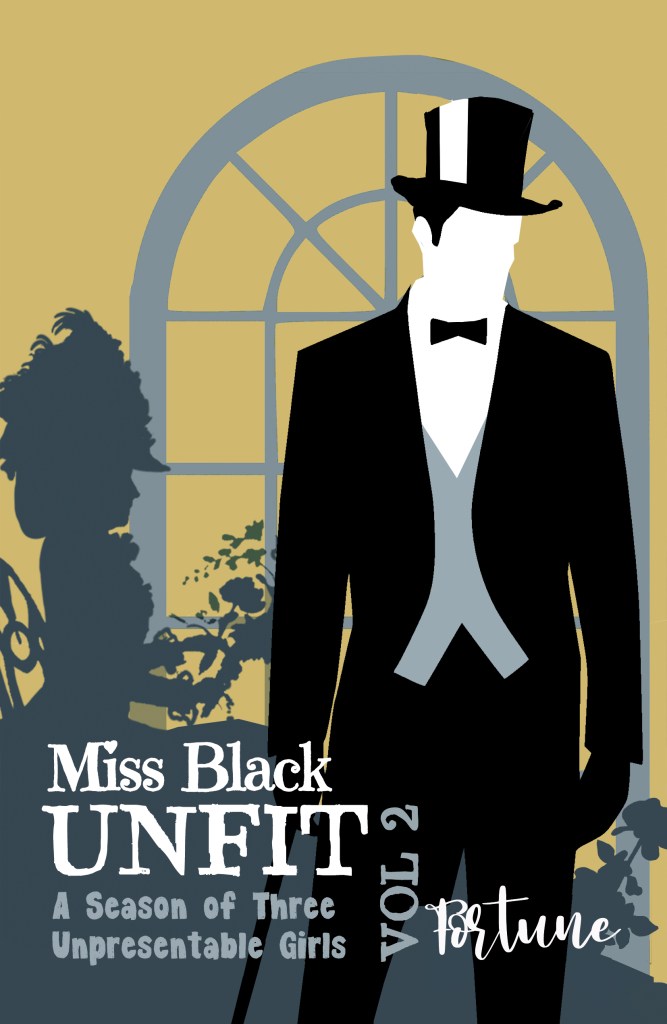
“So that’s how it is. You allow yourself to quote Baudelaire,” said Fortune.
“I do.”
The Season of 1889 has begun. And what are three thoroughly unpresentable sisters to do in the great melting pot of London—that magnificent, smoke-choked city roiling with suffragist movements and class struggles, crammed with slums where poverty is a scandal, alive with cultural avant-gardes, and populated by men and women of every faith, class and nationality, where nobles and commoners breathe the same air fouled by a thousand chimneys?
Why, obviously—squeeze themselves into meringue-shaped gowns and go curtsy before the Queen.
The eldest sister, Rachel, has admittedly already sorted herself out, having married a marquess of all things. But the two younger ones, Vera and Fortune, remain gloriously unattached.
Fortune is not particularly interested in changing that. She escapes her guardian’s household at every opportunity to cultivate rather unconventional friendships with the most revolutionary women in the city—a pastime that carries its own risks, given that protest marches have a habit of ending with everyone involved under arrest.
Her cousin Laura cannot fathom what on earth she’s thinking, especially when every eligible bachelor in London seems to be circling. The trouble is that none of the pallid sons of the aristocracy make for interesting company—none, that is, except one: the sulfurous, scandalous, hopelessly rakish Duke of Grey, notorious gambler and the private terror of every mother with a marriageable daughter.
With him, Fortune finds she gets along rather well.
Pity that being seen in his company could single-handedly destroy the reputation of every woman in her family.
What could possibly go wrong?
3. VERA

“I don’t think this is a particularly good idea,” Haddock observed.
“I’m a Vassemer. We don’t have good ideas.”
The Season of 1889 is drawing to a close, and two of the three Vassemer sisters have settled themselves — and, as every gossip in the capital has gleefully noted, settled themselves remarkably well, marrying considerably above their station.
Which leaves only Vera.
Vera, who keeps insisting to anyone who will listen that she intends to become a successful writer and has absolutely no interest in marriage. Was there ever anything so scandalous? Who on earth would want a girl like that?
As it happens, London has rather more interesting scandals on its hands this season. Not the standard fare: adultery, blackmail, illegitimate children, creative accounting. Not even the perennial nuisance of the nouveaux riches demanding more room at the table. And certainly nothing to do with the suffragists and their absurd insistence that women ought to vote.
No. Somewhere in the city, a secret is about to surface. The kind that polite society has always known existed and has always agreed, collectively and very firmly, not to mention.
The greatest scandal of the age is coming.
Or perhaps not. After all, if there is one thing the nobility of the realm has always excelled at, it is sweeping things under the carpet.
Unfit is a trilogy about the tribulations of several perfectly respectable gentlemen who asked nothing more of life than peace, quiet, and the sacred comforts of the patriarchy — now besieged by the staggering tactlessness of three young women with heads full of nonsense, set in a better time, when men were men and women were houseplants.
4. KAYAL
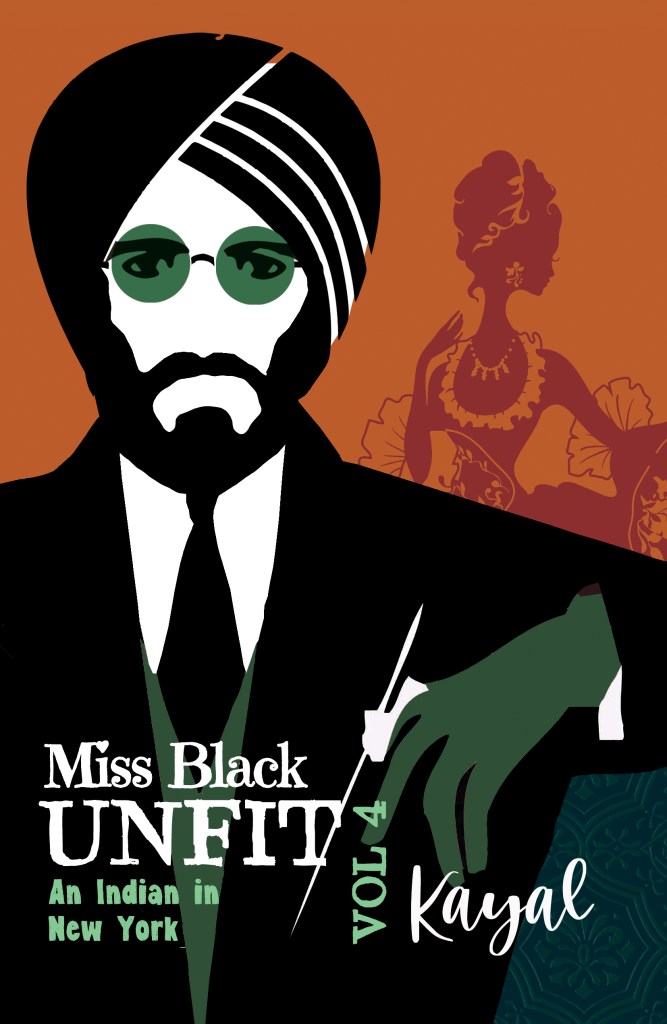
“They should invent another word for it. No, actually, you know what? They shouldn’t invent anything at all. ‘Person’ works perfectly well — it covers everyone and every possibility.”
It is 1894. Dharya Kayal — forty-four years old, former cavalry soldier in Her Majesty’s Army, naturalised British subject, homosexual back when the commonly accepted term was still “invert,” best friend of Lord Northdall, a man of considerable virtue, enviable charm, and an impressive collection of turbans — is on his way to New York in search of a person. One single individual in a city of three million inhabitants, all of whom, in Kayal’s considered opinion, are completely out of their minds.
His search proceeds in a crescendo of confusion and eroticism.
Between dissolute heiresses determined to make him their trophy, violent (and attractive) police officers, an entire vice district to excavate, prostitutes, abandoned wives, progressive aristocrats, charitably-minded ladies who are fiercely homophobic, rat fights, cross-dressers, Irish gangs, and a society not entirely enthusiastic about dark-skinned gentlemen, Kayal has only two things to rely on: a valet who has never left Norfolk.
And an unlimited budget.
It will have to do.
Unfit is a series about the tribulations of certain respectable individuals who ask nothing more of life than peace, quiet, and the sacred comforts of the patriarchy — now challenged by the existence of people exactly like themselves in every respect, who have never done them any harm, set in a better time, when men were real men and everyone else was sent to hard labour.
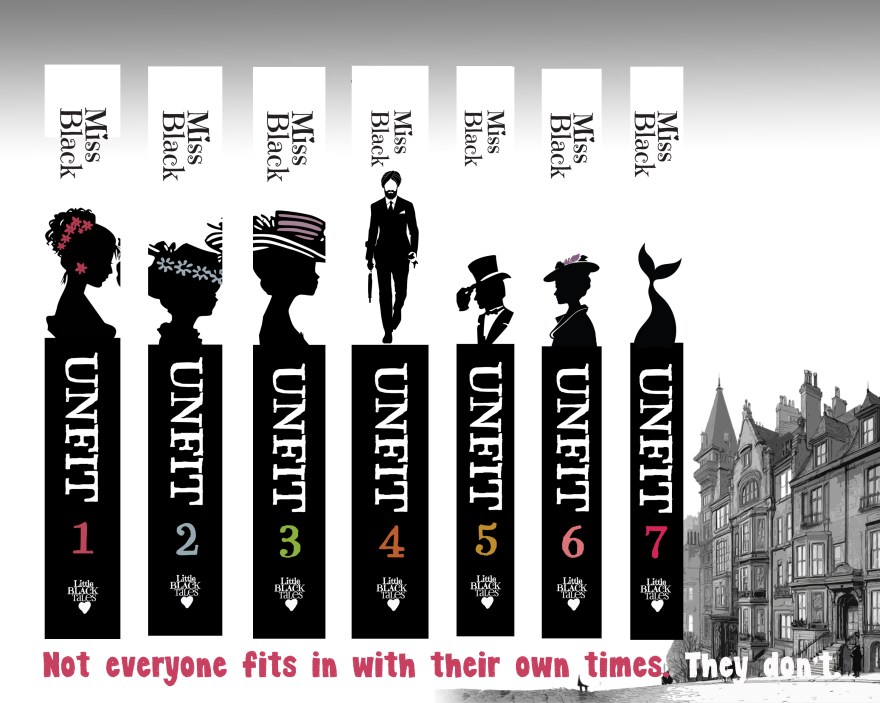
 Miss Black Official Page